Project Scope
Logo Design
Motion Graphics
3D Modeling
Level Design
Role
Independent Designer
Timeline
3 months
This personal project involved creating a playable game zone, Plunder Isle, within the World of Warcraft universe using both existing and kitbashed assets. The zone is designed as a self-contained experience with detailed environments, interactive elements, and a custom game mode inspired by Plunderstorm. It encourages exploration and supports a range of playstyles, including combat, questing, mini-games, and puzzle challenges, while incorporating narrative elements throughout.
Deliverables included:
✅ Hundreds of re-textured 3D assets and kitbashed models
✅ A fully playable game zone with scripted NPCs and mini-games
✅ A teaser video highlighting the zone’s features
Teaser
Introduction Experience
Players begin in a lobby space modeled after Tel’abim, designed to introduce the zone’s narrative, core mechanics, and manage player flow through staggered spawn points. The space is structured to guide players naturally from the intro experience straight into the main experience, using layout, sightlines, and NPC placement to direct attention toward key interactions.
The narrative establishes that players have been shipwrecked by the Bloodsail Buccaneers and pressed into service, reinforced through ambient NPC dialogue and environmental context. Interactable objects nearby marked by floating navigation icons provide starting equipment and introduce core abilities, allowing players to learn systems in a controlled setting before entering the open zone.
Jareth, a crew member aboard the Devil Shark, serves as the initial questgiver and primary point of direction, leading players into their first objective and establishing a clear progression path. The space was designed to enhance atmosphere and provide guidance, ensuring players can quickly understand mechanics while remaining grounded in the setting.
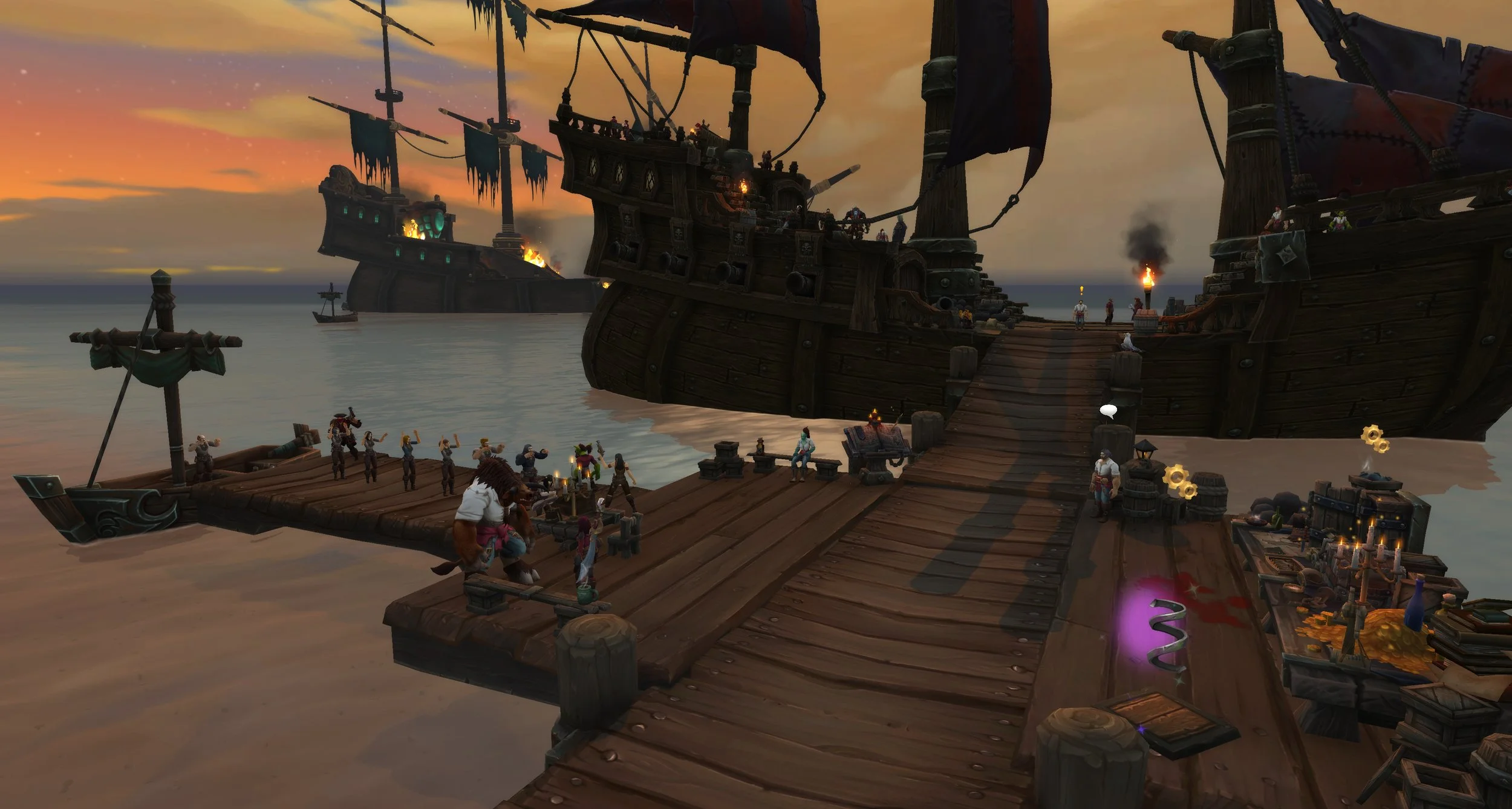
Players begin on the docks on Tel’abim, captured and forced to join the Bloodsail Buccaneers’ crew!
Gameplay Features
On Plunder Isle, players are equipped with a unique, streamlined action bar, inspired by the Plunderstorm system. This one-line interface dynamically adapts to the island, providing slots for spells and abilities that can be discovered or unlocked during exploration. A dedicated mount slot grants access to exclusive Plunder Isle mounts, and abilities can be swapped on the fly with a simple right-click, making collection and customization seamless and intuitive.
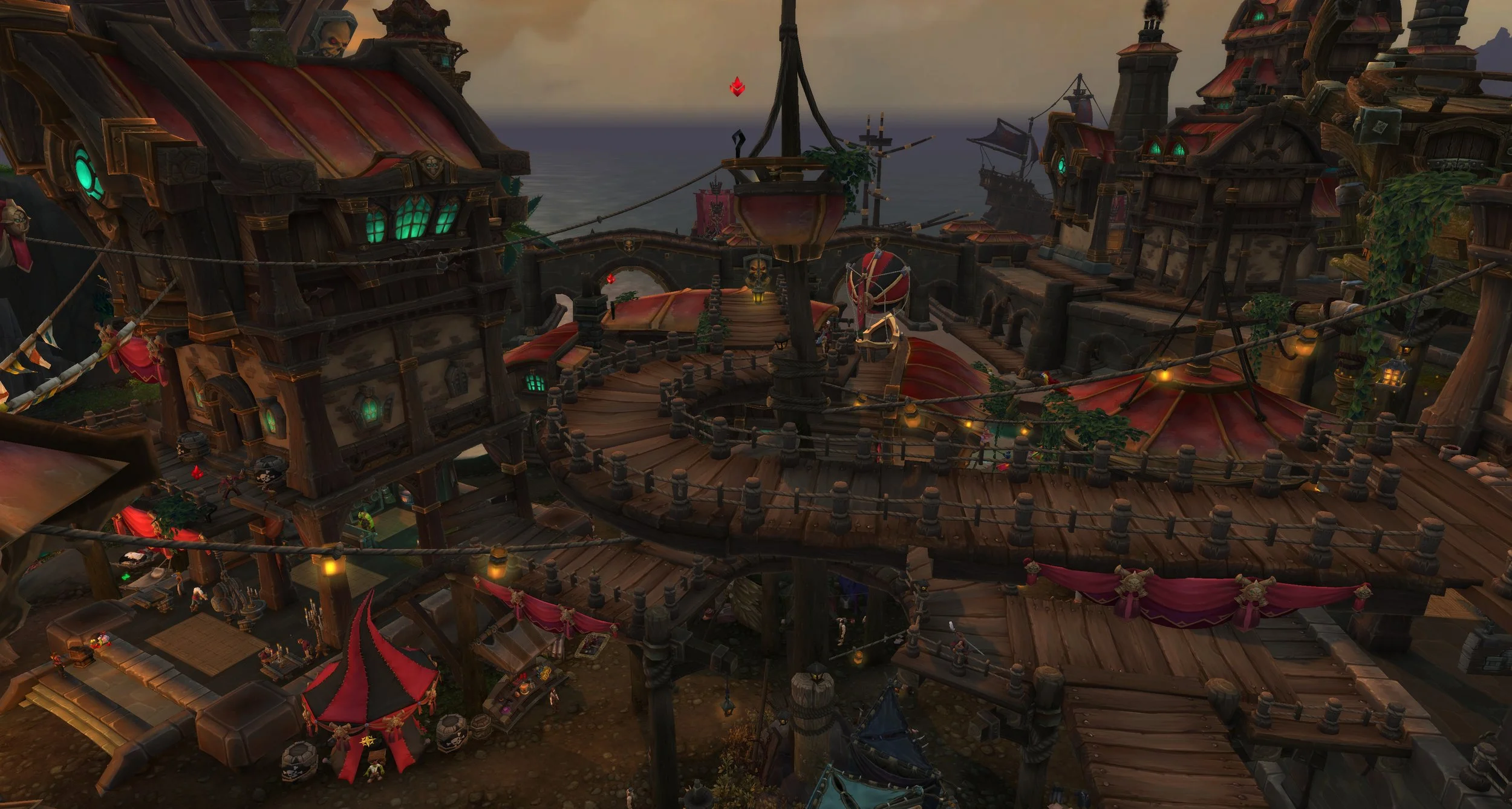
Players gain access to a [Grappling Hook] ability, allowing them to latch onto designated grapple points across the island (marked with a red arrow). This encourages exploration beyond standard paths, emphasizes the zone’s verticality, and allows access to hidden areas without requiring traditional routes.
Ladders, rappelling ropes, and similar props trigger the Extra Button frame, allowing players to climb, descend, and traverse the environment with a temporary ability.
Points of Interest
In addition to its core gameplay, Plunder Isle was designed around a network of points of interest—locations that embed lore and environmental storytelling directly into the space, often supported by NPC dialogue or interactions.
These areas reward player exploration and help reinforce the zone’s identity while keeping it feeling active. To extend replayability, some events are driven by non-static NPC paths and timed events, or “vignettes,” introducing variation and making discoveries feel more organic.
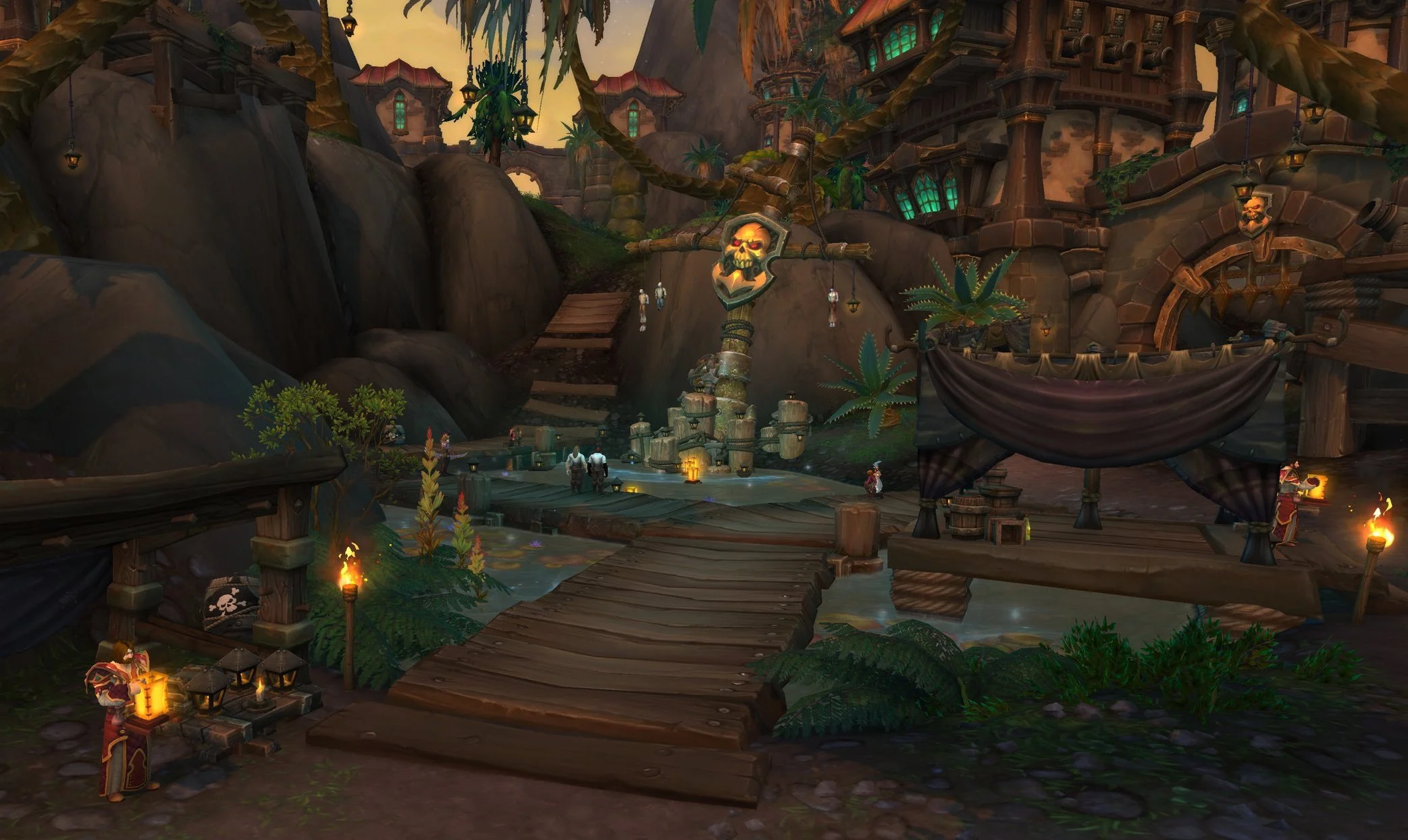
Lamplighter’s Oasis, a hidden point-of-interest where players can purchase and place lantern objects from vendor NPCs.
Quest Design
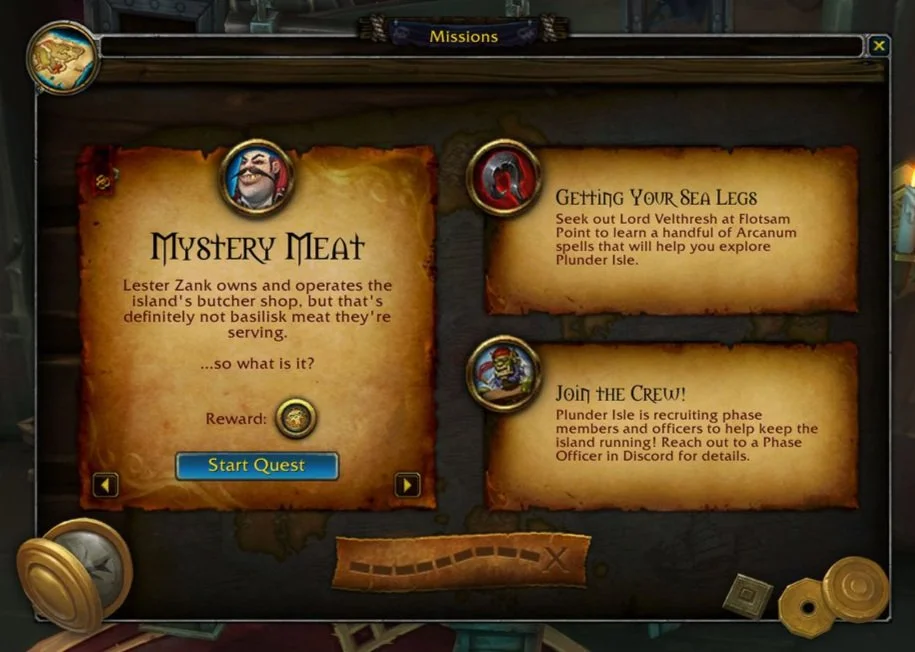
Mission Boards placed throughout the island provide access to a centralized UI that displays available activities, including progression through the main quest campaign. Their placement allows players to easily re-engage with content, pick up where they left off, and stay aware of new developments across the zone.
The main campaign is structured as a series of short, weekly quest chains designed to keep the island feeling active. These quests guide players across different areas, highlight interactions between NPCs, and expand on the world’s narrative beyond what is conveyed through the environment alone.
Quest design prioritizes exploration, narrative, and player immersion, with clear, concise objectives that respect player time. Additional depth is offered through optional branching dialogue and phased environmental changes, reinforcing a sense of progression and responsiveness within the world.
Zone Layout & Map
I used the in-game map for Jorundall as a foundation to create a zone map for Plunder Isle, matching the existing visual style and adding illustrated landmarks to highlight key points of interest. Beyond building the environment, I made deliberate choices to manage gameplay performance despite the high prop density, while designing the overall layout to feel cohesive and naturally guide players through the space.
The western side of the zone functions as the primary player hub, with hidden triggers that dynamically reduce clutter view distance as players enter and exit the area to ensure smooth gameplay.
The eastern side of the map is designed for exploration, with neutral and hostile creatures placed strategically to create a sense of life without overcrowding the space.
A zone map for Plunder Isle I created using the game’s original Jorundall map as a base.
Rewards
The Isle is designed around the same principles as a theme park zone like Darkmoon Isle—players can earn a currency (Plunder Doubloons) through a variety of activities across the island, which can then be spent on items for progression or cosmetic items. These activities include:
Carnival-style mini-games that feel fun to replay.
Repeatable daily quests that enrich the zone’s lore.
A quest campaign unveiling the main story of the zone.
Hidden caches of treasure scattered across the zone.
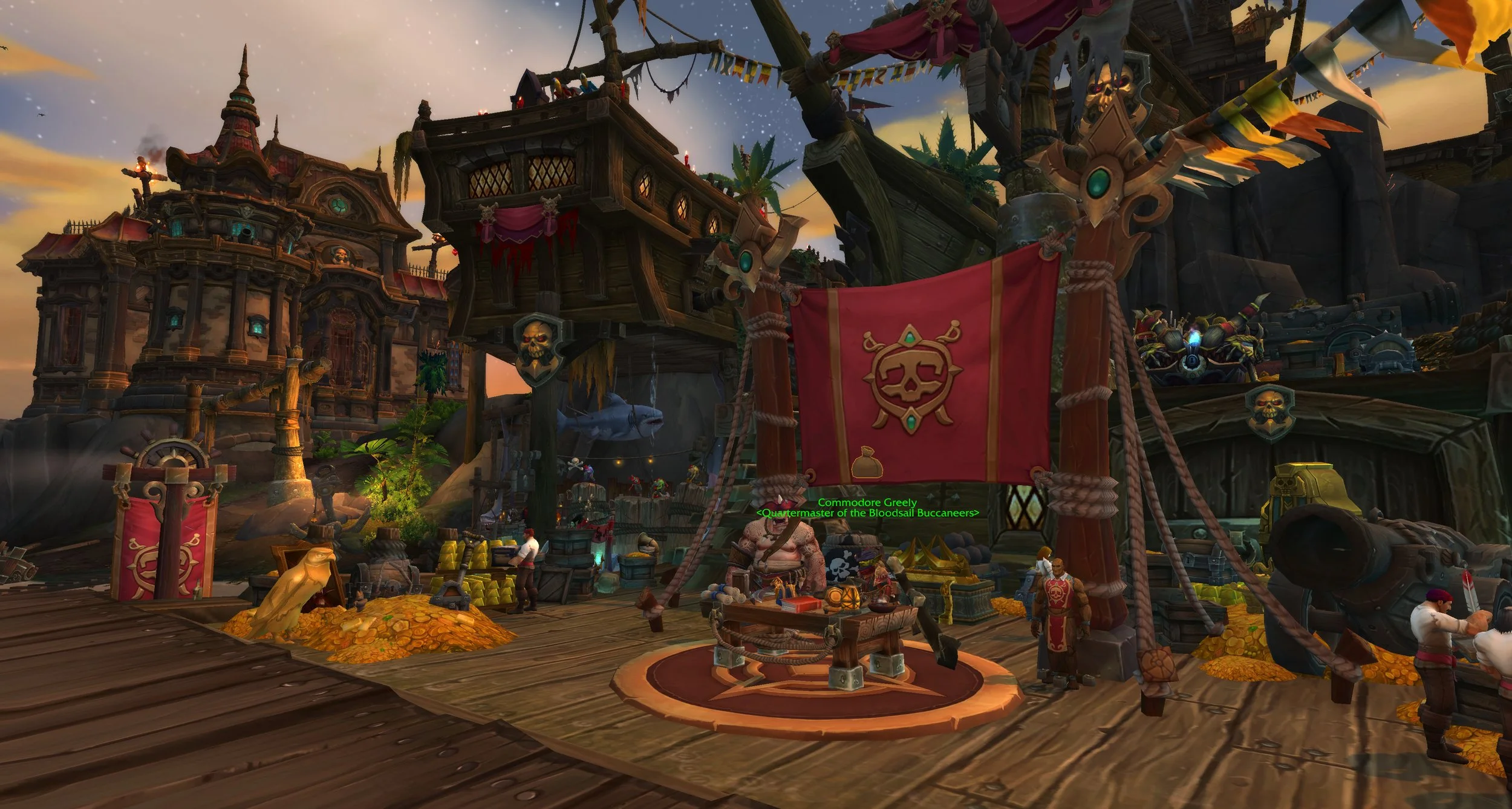
The Main Deck, where players can cash in their Plunder Doubloons for cosmetic rewards.